


Six weeks after the Democratic Republic of the Congo (DRC) declared its latest Ebola outbreak, the situation has escalated rapidly. The outbreak has reached 1,274 confirmed cases in DRC as of June 29, 2026, across 34 health zones in Ituri, North Kivu and South Kivu provinces, making this one of the country's most significant Ebola outbreaks in recent history. Neighboring Uganda has 20 confirmed cases.
Unlike some previous Ebola outbreaks, however, this response faces a unique challenge: there are currently no approved vaccines or therapeutics for the Bundibugyo strain responsible for the outbreak.
Without those medical tools, stopping the spread of Ebola depends on strong infection prevention practices, rapid surveillance, trusted community engagement and health systems that can continue delivering essential care safely during a crisis.
That is where Corus organization IMA World Health is focusing our response.
Strengthening infection prevention in frontline health facilities
When vaccines are unavailable, preventing transmission becomes the most effective strategy.
Working alongside the Ministry of Health, and with support from the U.S. Department of State, IMA World Health is helping improve infection prevention and control (IPC) practices in health facilities across eastern DRC.
To date, our teams have assessed 125 high-risk health facilities across 12 health zones, evaluating a range of factors from personal protective equipment inventory and waste management procedures to routine infection prevention practices. These assessments give health facilities a clear picture of what's working and where improvements are needed most. They also provide practical recommendations to better protect patients, healthcare workers, and the essential health services communities depend on.
More than 630 frontline health workers, including community health workers, have also been trained on Ebola-specific IPC measures, helping reduce the risk of transmission within healthcare settings.
Protecting health workers is essential not only for their own safety, but also for ensuring communities can continue accessing the vital healthcare services they rely on every day.
Communities still need maternal healthcare, treatment for malaria and other infectious diseases, childhood immunizations and routine medical care. By strengthening infection prevention, improving triage procedures, and supporting frontline facilities, IMA World Health is helping health centers continue delivering essential health services safely — even while responding to Ebola.
"We're helping health facilities stay open, protecting healthcare workers, supporting communities with trusted information, and working alongside local partners to stop transmission before it spreads further,” said Dr. Didier Kangudie, Country Director for IMA World Health and Corus International in the DRC. “That's how you contain an outbreak while continuing to provide the essential health services people need every day."
Containing Ebola starts in communities
As the outbreak expands into new communities, fear, misinformation and distrust have become significant barriers to containing the virus. Families may delay seeking care, hide symptomatic loved ones or hesitate to report potential cases, which allows transmission to continue.
IMA World Health is working with trusted local networks to help change that.
Community briefings have equipped local leaders, community members responsible for burials, community health workers, faith leaders, and other respected voices with accurate information about Ebola symptoms, prevention measures, how to address misinformation, and when to raise alerts.
At the same time, IMA World Health is expanding our communication strategy beyond traditional outreach. By partnering with popular TikTok creators in Goma, whose content reaches more than four million viewers across eastern DRC, we're helping ensure accurate, locally relevant public health information reaches people where they already consume news and information.
Whether delivered in community meetings or through social media, trusted communication remains one of the most effective tools for slowing transmission.
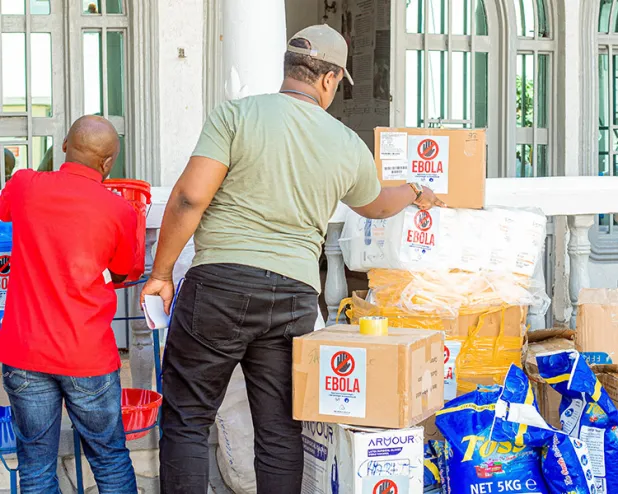
Our teams are also supporting quarantine facilities in South Kivu with infection prevention supplies, water, sanitation and hygiene materials, and operational support that helps high-risk contacts isolate safely while maintaining access to essential services.
Looking Ahead
The combination of active conflict, population displacement and the absence of approved vaccines or therapeutics makes this one of the most complex Ebola responses in recent years.
Success depends not only on strengthening health facilities but also on earning community trust, supporting frontline health workers, maintaining access to essential health services, and helping local leaders respond quickly when new cases emerge.
For more than two decades, IMA World Health has partnered with communities across the DRC to strengthen health systems and improve public health. Those long-standing relationships are proving especially valuable today, enabling our teams to work alongside government authorities and local partners to help contain this outbreak while ensuring communities continue receiving the care they need.
Frequently Asked Questions about IMA World Health's Ebola response
The current outbreak is caused by the Bundibugyo strain of the Ebola virus, for which there are currently no approved vaccines or therapeutics. That means the response relies heavily on infection prevention and control, rapid case detection, contact tracing, community engagement, and maintaining access to essential health services.
IMA World Health is working alongside the Ministry of Health to strengthen infection prevention and control in health facilities, train frontline health workers, support surveillance and contact tracing, engage communities with trusted health information, and help healthcare centers continue delivering essential services safely throughout the outbreak.
Community trust is essential to containing Ebola. When people understand the symptoms, know when to seek care, and trust local health authorities, outbreaks can be identified and contained more quickly. IMA World Health partners with community health workers, faith leaders, traditional leaders, and other trusted local voices to share accurate information, address misinformation and encourage early reporting of suspected cases.
Outbreaks place enormous strain on healthcare systems, but communities still need routine medical care. IMA World Health is helping health facilities strengthen infection prevention measures, improve patient triage, train healthcare workers, and enhance facility preparedness so essential health services — including maternal and child healthcare and treatment for other illnesses — can continue safely alongside Ebola response efforts.